
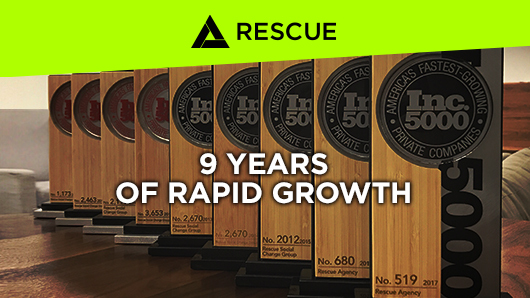
We’re thrilled to announce we’re on the Inc. 5000 list for the 9th year in a row. Between 2014 and 2016, our revenues grew an extraordinary 861%, making us America’s 519th fastest growing private company.
While every year we’ve made the list has been exciting, this past year’s growth has taken our behavior change strategies into unchartered territories. For example, this growth has allowed us to expand our segmentation research, both by gaining a deeper understanding of the power of teen peer crowds, and broader by allowing us to expand our unique segmentation approach to adults. We’ve also begun behavior change initiatives on cannabis, binge drinking, opioid use, and more.
As we expand our efforts across more and more behaviors, we want to pause and thank our team, clients, and everyone passionate about making healthy behaviors easier and more appealing with us. Our continued growth is a testament to the opportunities they provide.
In honor of our ninth year on the list, here’s nine difficult questions we’re tackling with our clients in 2017:
- Cannabis: As marijuana laws are changing, how can peer crowd segmentation help create more relevant and effective marijuana education campaigns for teens?
- Opioids: What are the characteristics of recreational young adult opioid users? Which messages can prevent their progression to addiction?
- Young Adult Binge Drinking: Many young adults already know about the negative health consequences of binge drinking, so how can we show young adults how to drink smarter, more safely, and within their limits?
- Physical Activity: How can we increase participation in regular physical activity among low income people?
- Adult Segmentation: Can segmentation based on values, interests, and attitudes help us reach adults more effectively?
- Sexual Health: How can we identify at-risk sexual minorities and the messages that motivate GBTQ teens to engage in HIV prevention strategies?
- Nutrition Education: How can we sell health as desirable, aspirational, and accessible to the same vulnerable populations that are constantly hearing from unhealthy food marketers?
- Branded Systems: How can social marketing brands compete with commercial marketers’ sophisticated branding systems?
- Food Access: How can we create grassroots support to reduce food deserts by increasing the number of grocery stores?
Category: Latest Updates